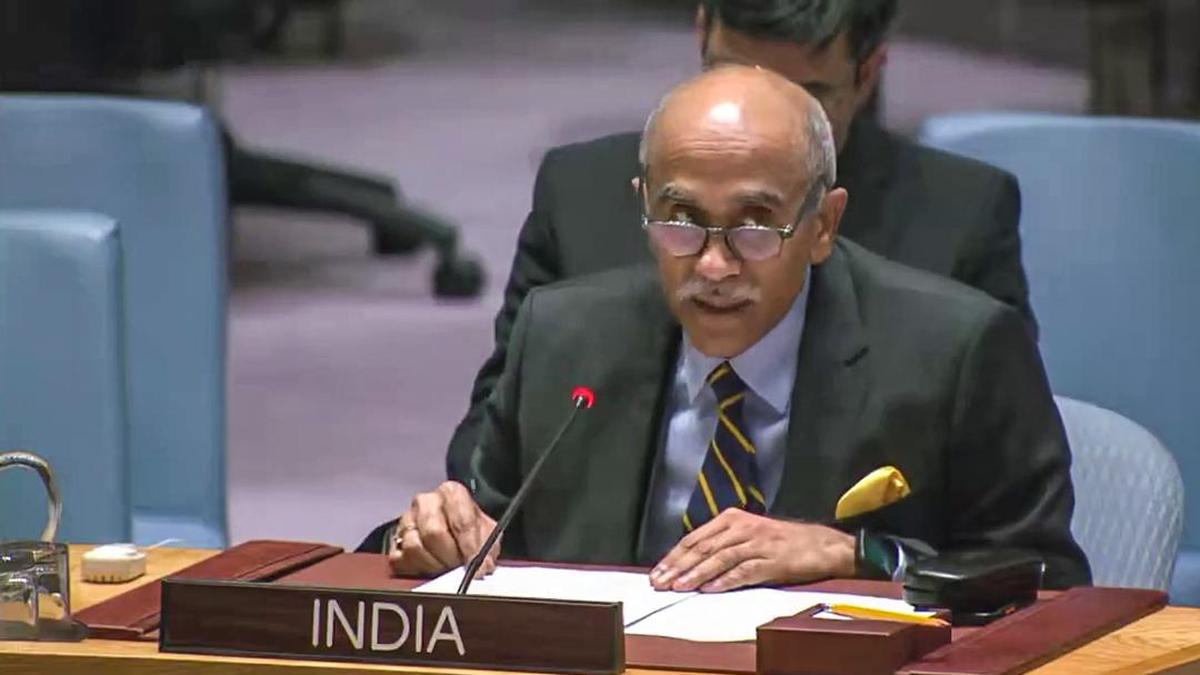
India has invoked the 1943 Bengal famine at the United Nations Security Council to highlight the unequal burden that global conflicts place on the Global South, calling for steps to prevent food insecurity amid the Ukraine war.
Speaking at a high-level Security Council briefing on Monday on protecting critical energy infrastructure and the Black Sea lifelines of global food supply, India's Permanent Representative to the UN, Ambassador Harish Parvathaneni, said developing countries were the worst affected by food, fuel, fertiliser and energy shortages caused by today's conflicts. He said India has consistently stressed that the costs of conflict are not shared equally.
Mr. Parvathaneni said the Bengal famine, which killed over three million people, was a stark reminder of the terrible human cost of a distant conflict caused by unchecked wartime priorities and calculations. Noting that the Ukraine conflict was now in its fifth year, he said its implications were being felt everywhere in an interconnected world, and reiterated India's readiness to contribute to all efforts towards a peaceful resolution.
India noted with concern that conflicts worsen food insecurity by disrupting agriculture, displacing communities, damaging infrastructure and hindering humanitarian access, with consequences that extend globally through disruptions to energy, fertiliser supplies, transport and agricultural trade. Mr. Parvathaneni said the Black Sea region and India together account for nearly a fifth of global cereal production, and called on the Security Council to prioritise humanitarian access, protection of civilian infrastructure and freedom of navigation. He also highlighted India's humanitarian assistance, including wheat supplies to Afghanistan, rice to Sudan and aid to Palestine, and expressed concern over attacks on merchant vessels and their crews.